Free PPE Hazard Assessment Form for Excel
A printable hazard assessment for each work area, a log of the hazards you found by body part, a PPE matrix that shows which protection each area needs, and a register that flags areas not yet certified or due for reassessment. Works in Microsoft Excel and Google Sheets.
What a PPE hazard assessment is for
Before anyone is handed safety glasses, somebody has to decide that the job needs them. That decision is the PPE hazard assessment: walk each work area while the work is going on, look for what could hurt the eyes, face, head, hands, feet, body, hearing or lungs, write down where it comes from, and pick the protection that covers it. Workplace safety rules expect employers to do this and to keep a written, signed certification that it was done.
It is not the same as checking the gear. A PPE inspection checklist asks whether the hard hat is cracked. The hazard assessment asks whether this area needs a hard hat at all, and it comes first.
The workbook has four working tabs:
- Assessment Form: the printable form you carry round the area: eleven hazard checks by body part, the source of each, the PPE chosen, and the certification block for the name, signature and date.
- Hazards: one row per hazard found, with the body part, what causes it, what you did about it before PPE (guards, ventilation, screens) and the PPE that covers what is left. Rows marked Present = No show you checked.
- PPE Matrix: work areas down the side, PPE across the top, and REQUIRED wherever a hazard in that area calls for it. It fills in from the Hazards tab; print it for the notice board at each area.
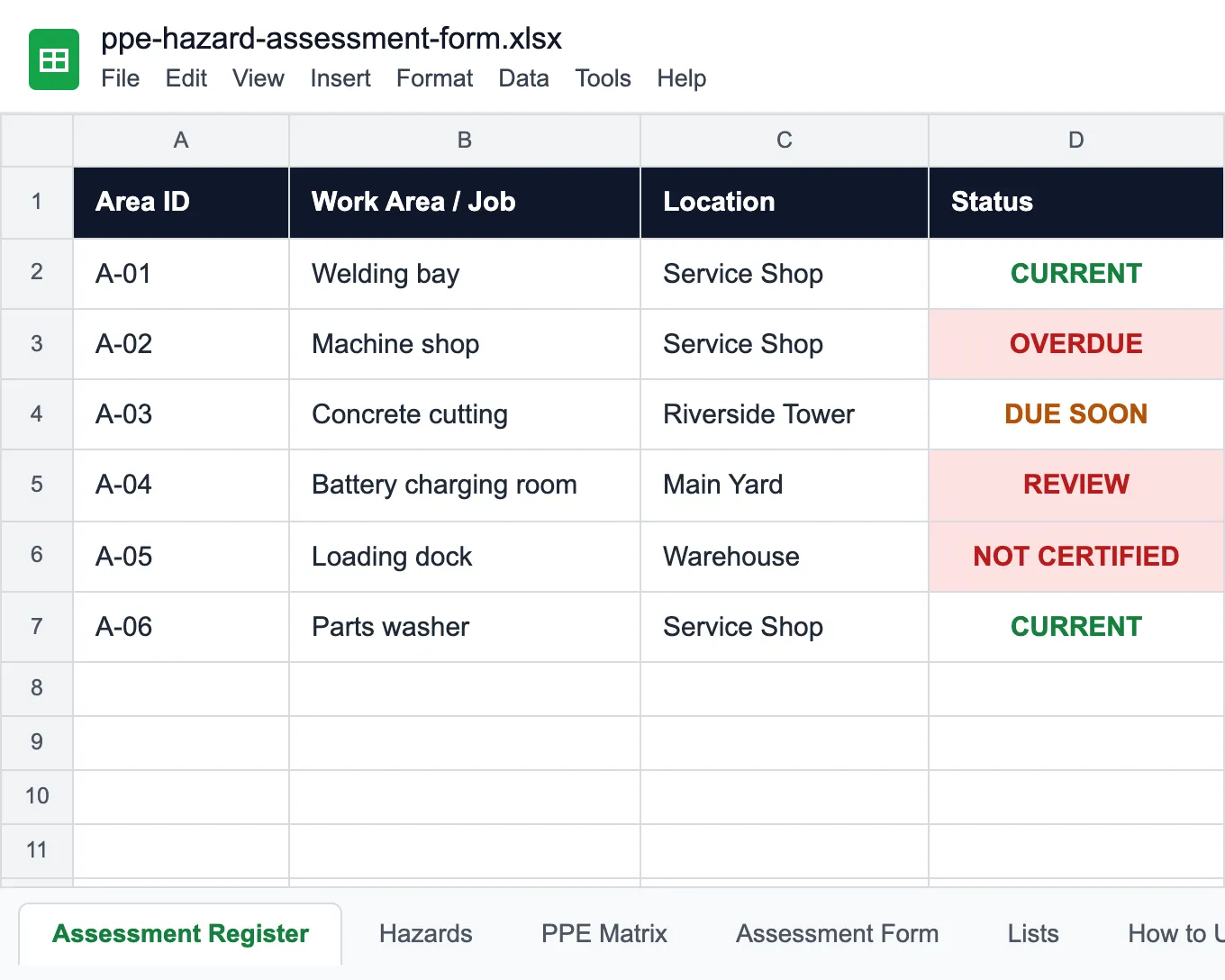
- Assessment Register: one row per area. Status reads NOT CERTIFIED until someone signs, REVIEW when you mark that the area changed, OVERDUE or DUE SOON by the reassessment date, and CURRENT otherwise.
The sample areas are what a maintenance and construction company runs: a welding bay, a machine shop, concrete cutting on site, a battery charging room, a loading dock and a parts washer.
How to do the assessment without it turning into a box-ticking exercise
Go when the work is happening. An empty welding bay looks safe. The same bay at 10 a.m. has grinding sparks crossing the walkway, and that is what the assessment is for.
Start with the people in the area, not the list. Ask what they do, which parts of the job they dread, and what they already wear and why. Then go down the body parts on the form and note every source: the lathe throws chips, the battery watering spills acid, the forklift lane runs past the dock door.
Fix what you can before writing PPE down. A guard, an extractor or a marked walkway removes the hazard for everyone; PPE only protects the person wearing it, and only when they wear it properly. The Hazards tab has a column for those controls so the gap between "we fixed it" and "we handed out gloves" stays visible.
Be specific about the PPE. "Gloves" does not protect anyone from battery acid if they are cotton. Write the type (chemical, cut-resistant, heat-resistant) and the spec in the notes column, because the person ordering replacements a year from now will read that, not your memory.
Sign the certification, date it, and set a reassessment date. Reassess at least once a year, and straight away when something changes: new machines, new chemicals, a new task, or an injury the PPE did not prevent. The register's "Area Changed Since Assessment?" column turns the status to REVIEW until you do.
For the jobs inside those areas, a job safety analysis template breaks each task into steps and scores the risk before and after controls.
Who uses a PPE hazard assessment form
Anywhere people need protection their everyday clothes do not give them.
Construction companies
Cutting, demolition and work below scaffolds, assessed site by site.
Manufacturing plants
Machine shops, welding, paint and assembly lines, area by area.
Maintenance shops
Battery rooms, parts washers and the service bay.
Warehouses and logistics
Docks, racking and forklift lanes.
Labs and schools
Chemistry labs, workshops and art studios.
Safety managers
Which areas are certified, which changed and which are due for reassessment.
| Capability | Free Template | UNIO24 FreeRecommended for growing teams |
|---|---|---|
| Assessment | ||
| Signed certification on recordThe template prints it. UNIO24 keeps the signed copy as a document with an expiry date and reminds you before reassessment is due. | Partial | Yes |
| PPE issued | ||
| Who holds which PPEEach item issued to an employee, with the date it went out and came back. | No | Yes |
| Condition checks with photosInspections run on a phone; a damaged item is flagged until it is replaced. | No | Yes |
| Data & reliability | ||
| Many sites at onceA shared file gets overwritten. UNIO24 handles simultaneous users. | Partial | Yes |
| Full support | 0/ 4 | 4/ 4 |
Frequently Asked Questions
About PPE hazard assessments and the form
Is the PPE hazard assessment form free?
Yes. No cost, no subscription, no card. Enter your name and email and the Excel file downloads instantly.
Who should do the PPE hazard assessment?
Someone who knows the work and knows what to look for: a supervisor, a safety lead or an outside consultant, ideally together with the people who do the job. The person who certifies it signs the form and the register records who that was.
Is a PPE hazard assessment the same as a PPE inspection?
No. The assessment decides which PPE an area needs. The inspection checks that the PPE people have is still in good condition. You need both; the PPE inspection checklist template covers the second.
What does a PPE hazard assessment include?
The work area or job, the hazards found for each body part (eyes, face, head, hands, feet, body, hearing, breathing), where each one comes from, the controls already in place, the PPE selected for what is left, and a signed certification with the name of the person who did it and the date.
How often should a PPE hazard assessment be updated?
Once a year is a sensible default, and straight away when the area changes: new machines, new chemicals, a new task, or an injury the PPE did not prevent. In the register, set the area to changed and the status shows REVIEW until you reassess.
Should I do one assessment per area or per job?
Per area works for most places, because the hazards come from the equipment and the space. Do it per job when the same people move between areas, like a maintenance crew, or when one task has hazards the area does not, like cutting concrete inside a finished building.
More safety templates
For the PPE and the jobs behind the assessment.
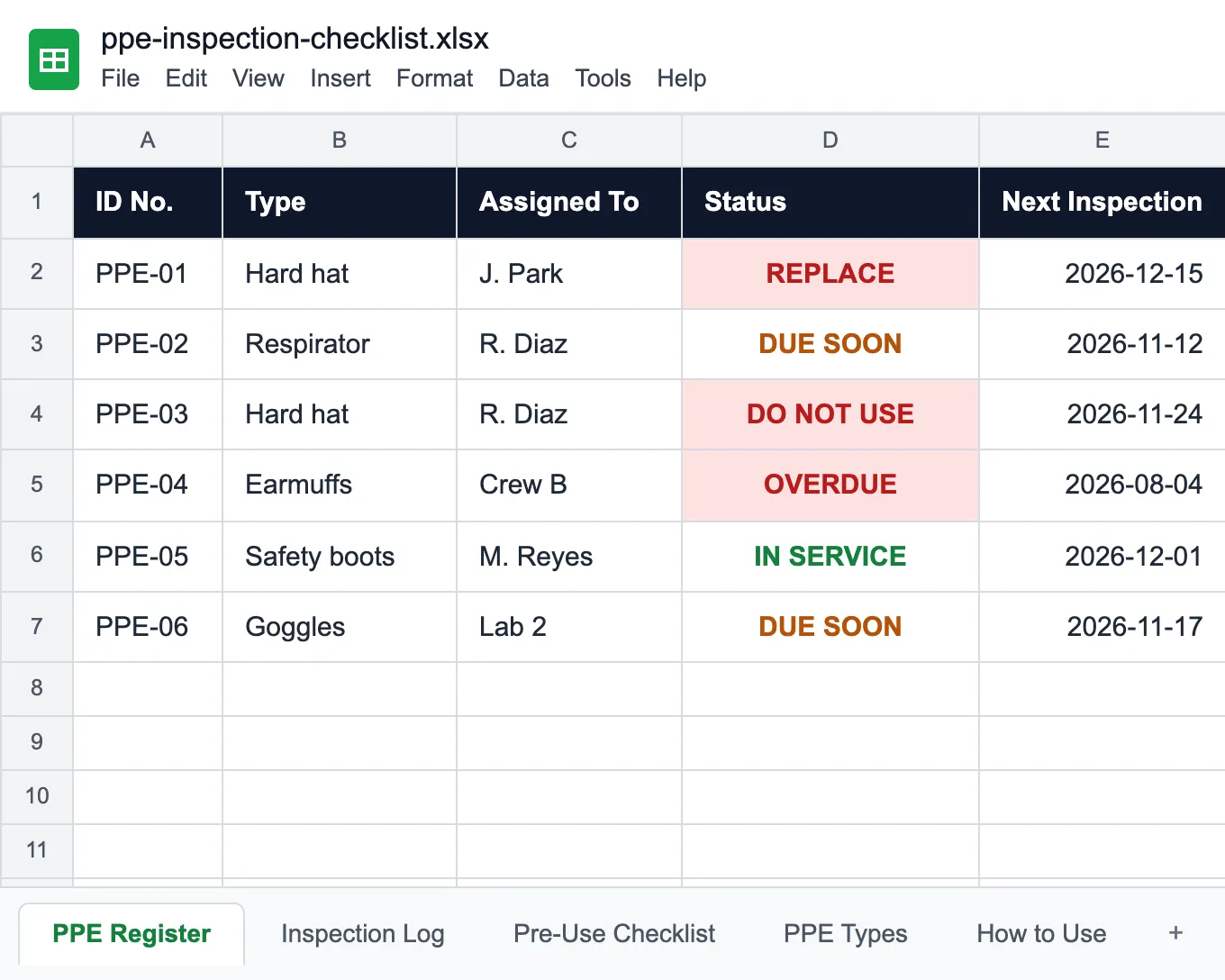
PPE Inspection Checklist
Weekly pre-use checks of each worker's PPE and a log that takes damaged items out of use.
Read more: PPE Inspection Checklist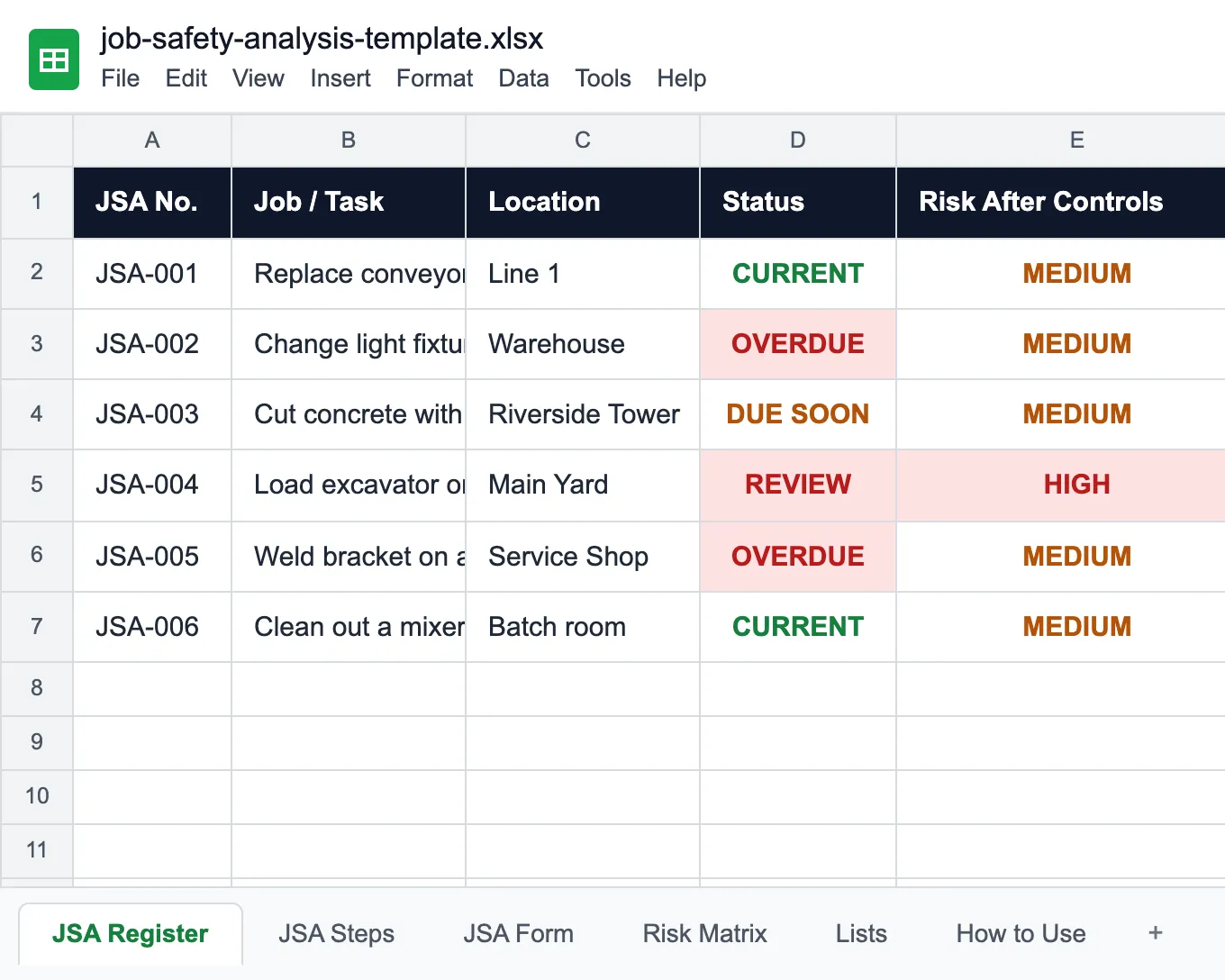
Job Safety Analysis Template
Job steps, hazards and controls scored before and after, with a crew form.
Read more: Job Safety Analysis Template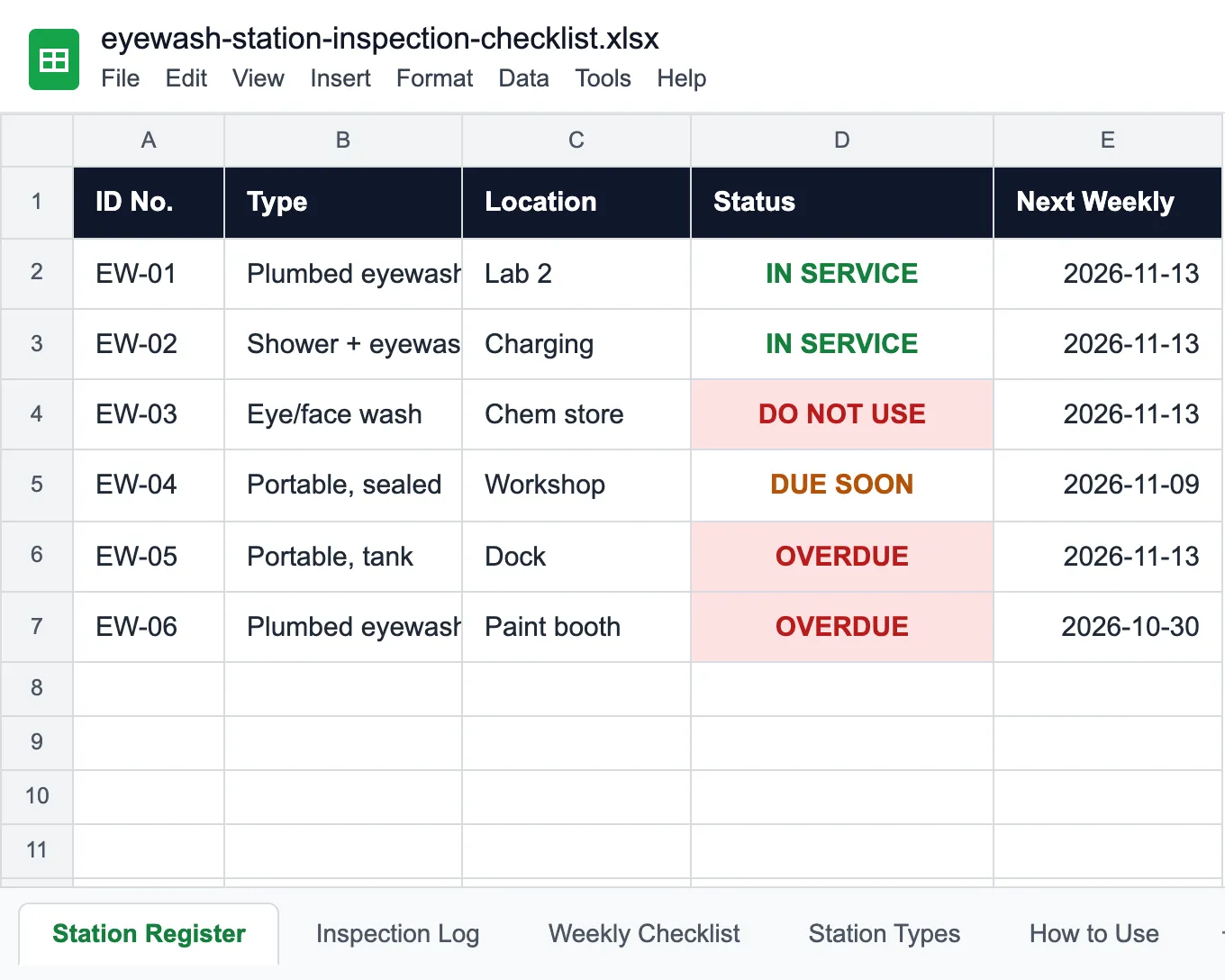
Eyewash Station Inspection Checklist
Weekly activation checks and the yearly inspection for every eyewash station.
Read more: Eyewash Station Inspection Checklist