IT Asset Management Software for Office, Hybrid & Remote Teams
Track every laptop, monitor, phone, network device, and software license across in-office and remote employees. Reuse what you already own instead of buying new. Keep an inventory ready for security reviews.
Start for Free- 50 assets free forever
- No credit card required

One register for every asset, ready for any audit.
Asset tracking: what the company owns, where it is, and who's responsible for it. Record it once, then keep it current. Most teams only track laptops, monitors, and network gear. Furniture, AV equipment, vehicles, and tools are on the books, but no one knows where they are or who has them. UNIO24 brings everything into one register: where it is, who it's assigned to, what it cost. With role-based access and a change log on every record, the documentation for ISO 27001 and SOC 2 audits and vendor questionnaires is always at hand.
One register for IT, office, AV, vehicles, and any physical asset, with custody chain on every transfer
Auto-collected network-equipment details (model, IP, MAC, location) without manual entry
Per-record audit log and role-based access, audit-ready for SOC 2, ISO 27001, and reviews

Right-size IT spend: reuse what you have, refresh on real data.
Most IT teams have spare laptops on shelves and monitors in storage (bought for projects that came and went) while new requests trigger fresh procurement. UNIO24 surfaces every reusable asset and lets teams book equipment for short-term needs, so the next request is filled from existing inventory instead of a new PO. And instead of a blunt "every 3 years" rule, it tracks acquisition date, warranty, and usage per device. Refresh-planning reports flag the upcoming wave 12–24 months out, so capex hits the budget cycle, not a surprise quarter.
Booking / reservation for short-term needs; reuse and redeploy before approving a new PO
Visibility into idle and reclaimable equipment before new orders
Refresh-cohort forecasting (12 / 24 / 36 months) with per-device warranty, lease-end, and TCO
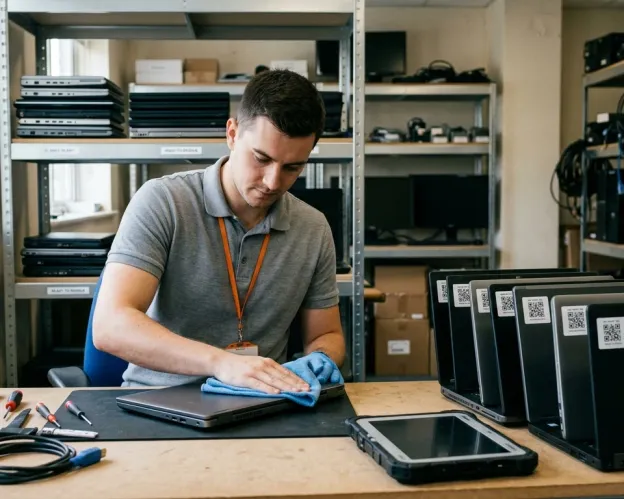
Track licenses, contracts, and renewals.
UNIO24 keeps every software license on the same register as the rest of your equipment: vendor, contract value, renewal date, seats purchased, seats assigned, and per-assignee last-active timestamp where the API supports it. Reports show who has what, when each contract is up for renewal, and which seats can be reclaimed before paying for them again.
License records: vendor, seats purchased vs assigned, contract value
Renewal calendar by date, value, and vendor
Per-assignee mapping, plus API last-active / seat-utilization where available

Run repair tickets: internal and at external service centers.
When a laptop battery dies, a printer jams, or a piece of equipment needs scheduled service, IT and facilities staff already track tickets. UNIO24 puts those tickets on the same register as the assets they're about. Internal repairs run as work orders against the asset; equipment sent to vendors or service centers is tracked from check-out to return, with status and expected return date. SLA timers track response and resolution targets per ticket category, with auto-escalation when targets approach or pass.
Repair tickets tied to the asset and its full history; internal fixes run as work orders
External service-center tracking: check-out, vendor, expected return, status
SLA timers per category, response/resolution targets with auto-escalation
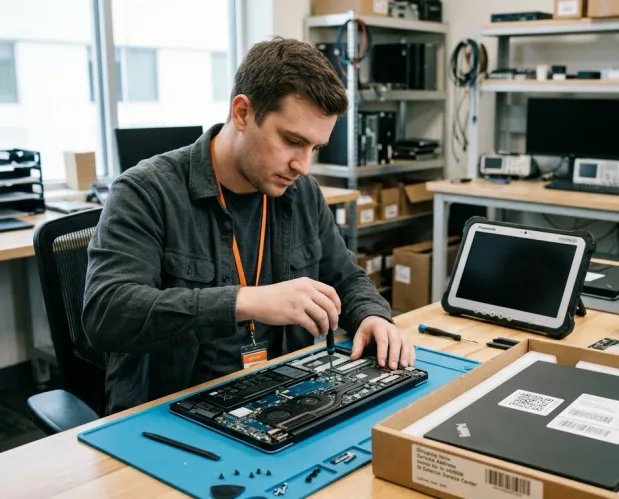
Built for every IT and adjacent role
- Bulk-import asset inventory from your MDM or UEM via CSV or API
- Equipment booking and reuse, surface idle assets before procuring new ones
- Refresh-cohort planning 12–24 months out for capex justification
- License tracking with renewal calendar and per-assignee mapping
- Per-record audit log with field-level change history
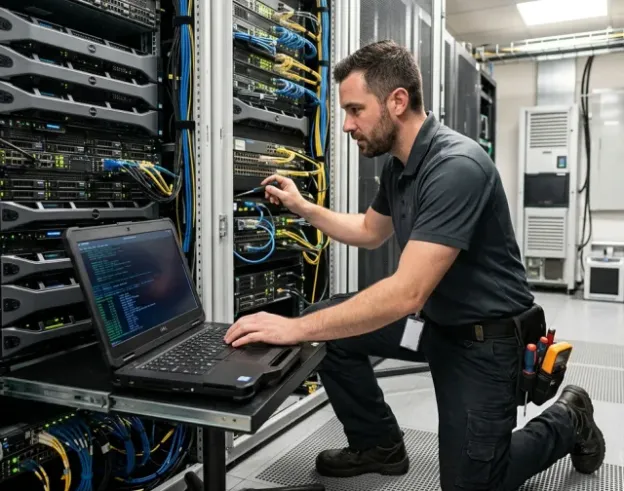
- Real-time fleet view with per-region, per-department, per-employee breakdown
- Asset inventory ready for security reviews (SOC 2, ISO 27001, customer questionnaires)
- Capex forecast tied to real lifecycle data for board / CFO conversations
- MSP white-labeling for managed multi-client operations

- Pull acquisition-cost and useful-life forecasts on demand
- Reconcile capex with the ERP / GL automatically via API
- Per-employee TCO including hardware and software spend
- Lease vs. purchase economics with break-even analysis
- License contract calendar: renewals, terms, value, vendor consolidation opportunities

Who it's for
UNIO24 serves IT teams where hardware fleets, software licenses, and SaaS subscriptions all need to land on one trusted inventory.

In-house Corporate IT
50–10,000+ employee companies with hybrid or remote workforces

Managed Service Providers (MSPs)
Multi-client operations with per-client isolation, white-labeling, and consolidated dashboards

SaaS Startups & Scale-ups
Lightweight setup for fast-growing teams with remote-first hardware and SaaS-heavy stack

Government IT
Per-state asset accountability rules, NIST 800-53 alignment, FedRAMP-adjacent workflows

Industrial / OT Convergence
IT + OT inventory: laptops alongside PLCs, ruggedized handhelds alongside corporate fleets
Healthcare IT
PCs, tablets, and clinical workstations with HIPAA-aligned access and BAA support
What IT teams see with UNIO24.
One register, every asset state, audit log on every record.
Per-asset history
Transfers, tickets, and changes in one timeline per asset.
Asset utilization
Idle equipment surfaced before approving new orders. More of what you own stays in active use.
Per-record audit log
Every change captured with user, timestamp, and field-level history.
Source of truth
One register replaces parallel spreadsheets across IT, facilities, finance, and ops.
IT asset management: common questions
Can UNIO24 handle hybrid and fully-remote workforces?
Yes. Multi-location support handles distributed teams across countries with per-region tax and depreciation rules. Equipment is tracked by employee and location regardless of whether it lives in an office, a home, or a temporary co-working space.
Don't see your question? Talk to sales
