Free Fire Hydrant Inspection Checklist for Excel
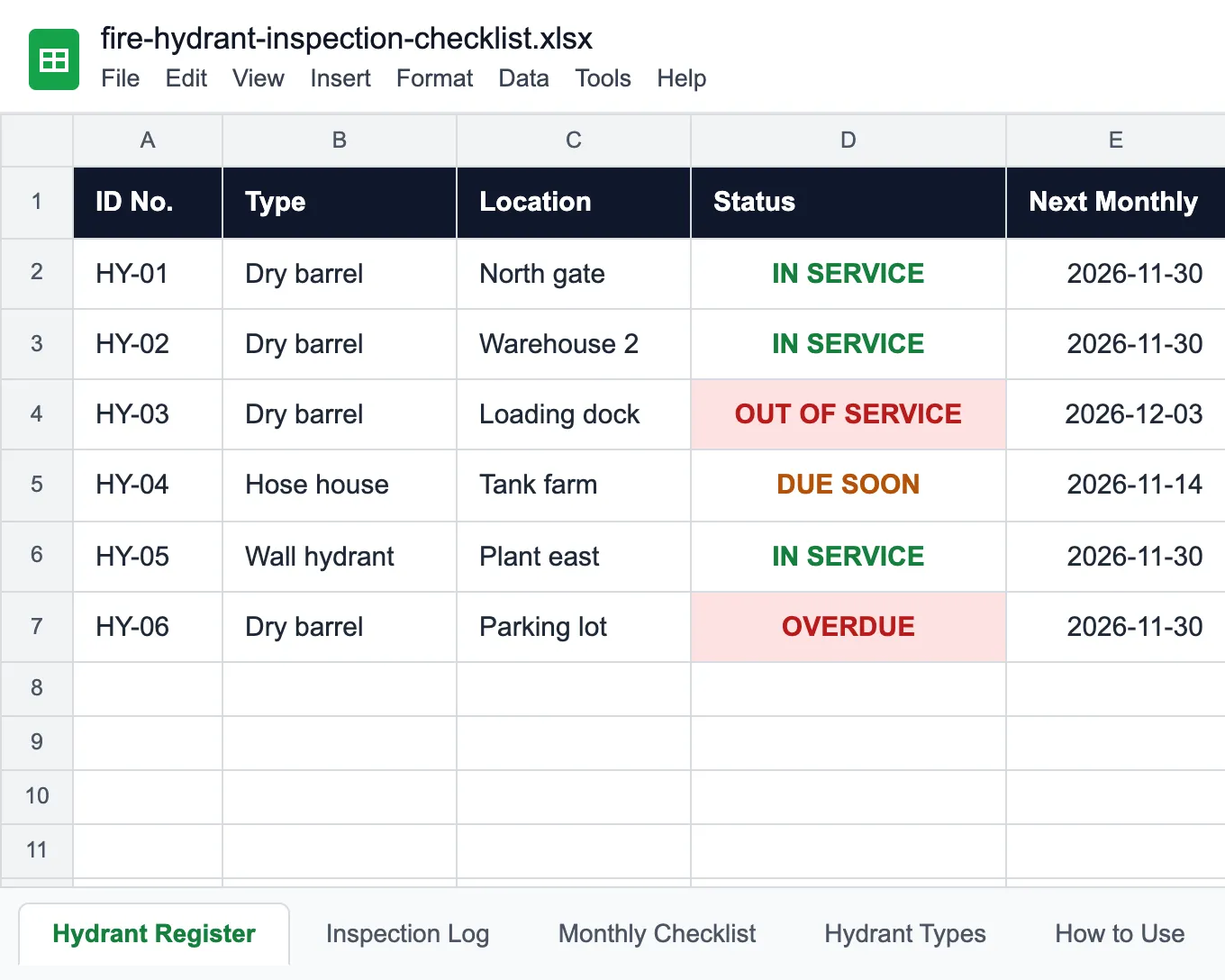
A monthly checklist for each private hydrant on your site, plus the log and register behind it: a hydrant that fails stays OUT OF SERVICE until it is repaired, and monthly checks, annual inspections with flushing, and flow tests show OVERDUE or DUE SOON. Works in Microsoft Excel and Google Sheets.
What a fire hydrant inspection covers
Public hydrants on the street belong to the water utility. Private hydrants on a plant, campus, warehouse yard or tank farm belong to the site owner, and fire codes make the owner responsible for keeping them accessible and in working order. The usual routine has three layers: a visual check through the year, an annual inspection where the hydrant is opened fully, flushed and checked for drainage, and a flow test on a longer cycle that confirms the water supply. Your fire code, insurer and water utility set the exact intervals.
The Monthly Checklist prints one sheet per hydrant per year, a column per month:
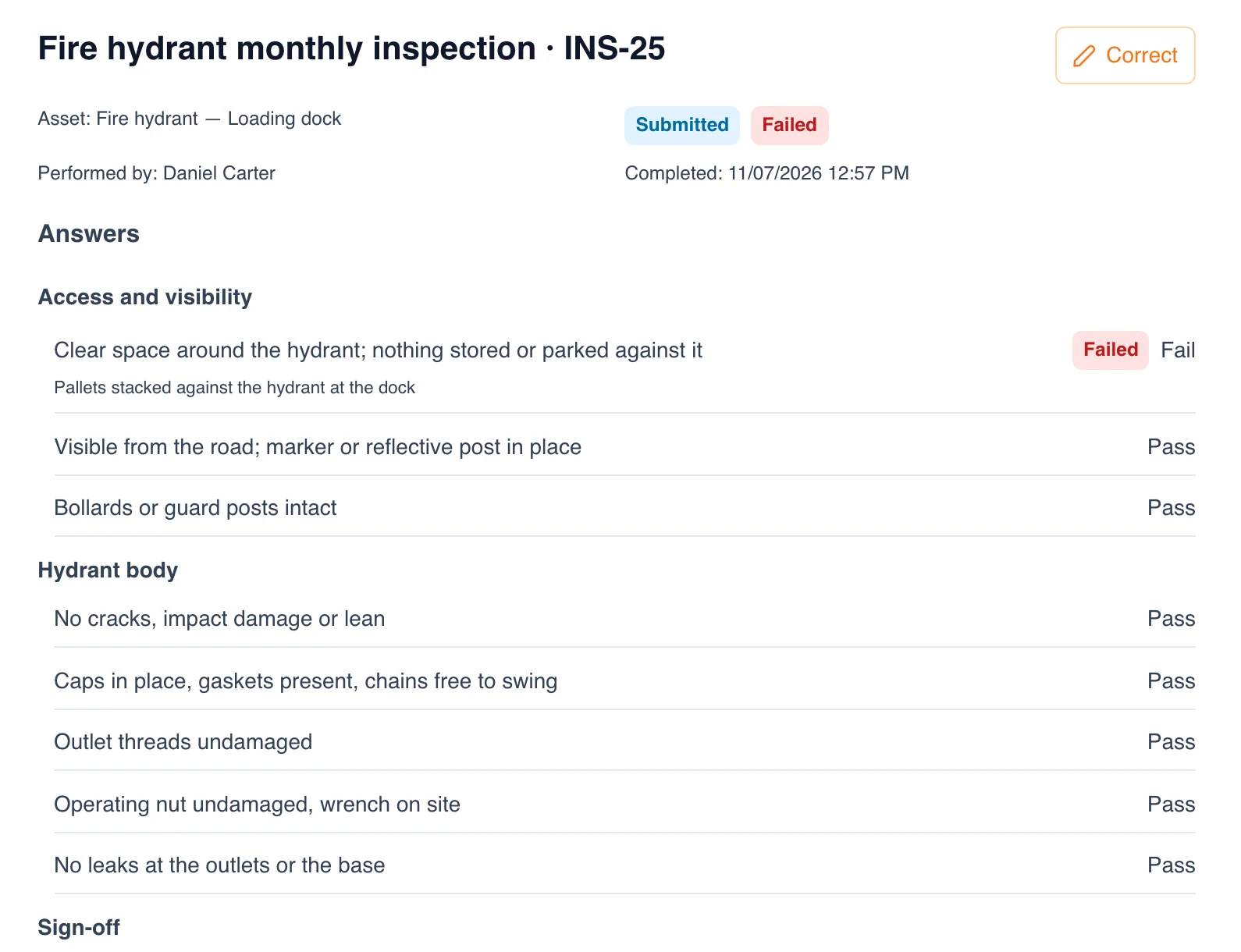
- Access and visibility: clear space around the hydrant with nothing stored or parked against it, a marker or reflective post visible from the road, bollards intact.
- Hydrant body: no cracks, impact damage or lean; caps and gaskets in place; outlet threads and the operating nut undamaged, the wrench on site; no leaks at the outlets or the base; paint and color code legible.
- Hose house: hose, nozzles and wrench present and dry, where fitted.
- After use or the annual test: a dry barrel drains fully after closing.
A ticked sheet shows someone walked past. It cannot stop the pallets going back against the hydrant on Tuesday. So the workbook keeps the record behind it:
Inspection Log. One row per monthly check, annual inspection and flush, flow test or repair, with PASS or FAIL. A FAIL stays an OPEN DEFECT until the repair date is entered.
Hydrant Register. One row per hydrant, with type, location, make and model, serial and main and outlet sizes. It reads the log, shows OUT OF SERVICE while a defect is open, and runs three clocks: the monthly check, the annual inspection and flush, and the flow test per hydrant type from the Hydrant Types tab (five years by default, editable). Status reads OVERDUE when any of them runs out, DUE SOON just before, and IN SERVICE otherwise.
For extinguishers on the same site, use the fire extinguisher inspection checklist.
Who uses a fire hydrant inspection checklist
Anyone who owns hydrants on private property.
Manufacturing plants
Yard hydrants around production buildings and storage areas.
Warehouses and logistics parks
Hydrants at docks and yards, where trailers and pallets end up in front of them.
Campuses and hospitals
Private loops around buildings, maintained by the facilities team.
Tank farms and refineries
Hydrants with hose houses where the fire risk is highest.
Property managers
Hydrants on business parks, apartment complexes and shopping centers.
Fire protection contractors
Annual inspections, flushing and flow tests across client sites.
Before you fill it in
The dock hydrant failed in March. The pallets are back.
Try UNIO24 to automate hydrant inspections.
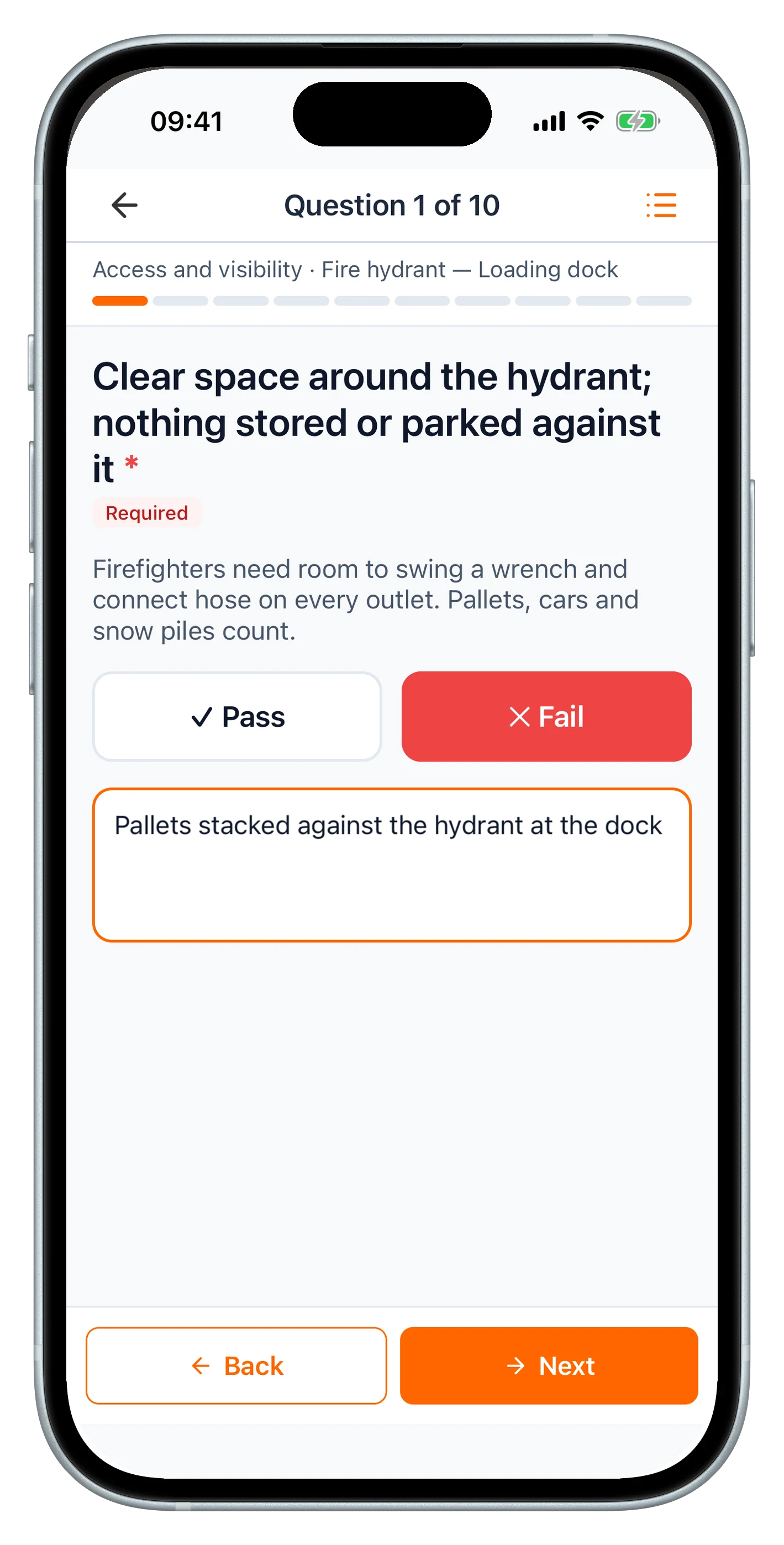
Try UNIO24 FreeA spreadsheet goes out of date within days, and keeping it current takes someone's time every month. UNIO24 automates that work: each check, defect and repair updates the hydrant's record as it happens.
| Capability | Free Template | UNIO24 FreeRecommended for multi-site teams |
|---|---|---|
| Inspections | ||
| Monthly hydrant checklistThe template prints a yearly sheet per hydrant. UNIO24 runs your checklist on a phone at the hydrant. | Partial | Yes |
| Photos of the problemThe blocked access or the damaged cap, attached to the check. | No | Yes |
| Defects and due dates | ||
| Keep a failed hydrant flaggedThe register shows OUT OF SERVICE from the log. UNIO24 records the defect and can turn it into a repair work order. | Partial | Yes |
| Annual inspection and flow test datesBoth track them. UNIO24 also schedules the next inspection. | Partial | Yes |
| Data & reliability | ||
| Many sites and contractors at onceA shared file gets overwritten. UNIO24 handles simultaneous users. | Partial | Yes |
| Full history per hydrantEvery check, flush, flow test and repair kept on the hydrant | Partial | Yes |
| Full support | 0/ 6 | 6/ 6 |
Frequently Asked Questions
About fire hydrant inspections and the template
Is the fire hydrant inspection checklist free?
Yes. No cost, no subscription, no card. Enter your name and email and the Excel file downloads instantly.
Who is responsible for a fire hydrant on private property?
The property owner, in most places. The water utility maintains the public hydrants on the street; hydrants on a private water main, behind the meter or inside the property line, are the owner's to inspect, test and repair. Check with your local fire department, which often keeps a list of private hydrants and asks for the inspection records.
What does the annual hydrant inspection include?
Opening the hydrant fully and flushing it until the water runs clear, checking that the valve opens and closes smoothly, that the caps and threads are sound, that there are no leaks, and on a dry barrel that it drains after closing. Lubricate the operating nut and caps as the maker says. Log it as the annual inspection and flush; it also counts as that month's check.
How often should a private fire hydrant be inspected?
Commonly a visual check through the year (many sites do it monthly or quarterly, and after any vehicle strike), an annual inspection where the hydrant is opened fully, flushed and checked for drainage, and a flow test every few years. The exact intervals come from your fire code, your insurer and the water utility, so the template keeps the flow test interval editable per hydrant type.
How much clearance does a fire hydrant need?
Enough for firefighters to reach it from the road, swing a wrench on the operating nut and connect hose to every outlet. Many codes ask for about 3 feet clear all around and no parking within 15 feet, but local rules vary. Pallets, dumpsters, landscaping and snow piles are the usual problems.
What does the color of a fire hydrant mean?
In the US the caps or bonnet are often color-coded by the flow the hydrant delivers, and private hydrants are often painted differently from public ones. The scheme varies by city and utility, so follow the one your fire department uses and record any repainting in the log.
More fire and safety inspection templates
The same register idea, applied to the rest of your fire protection.
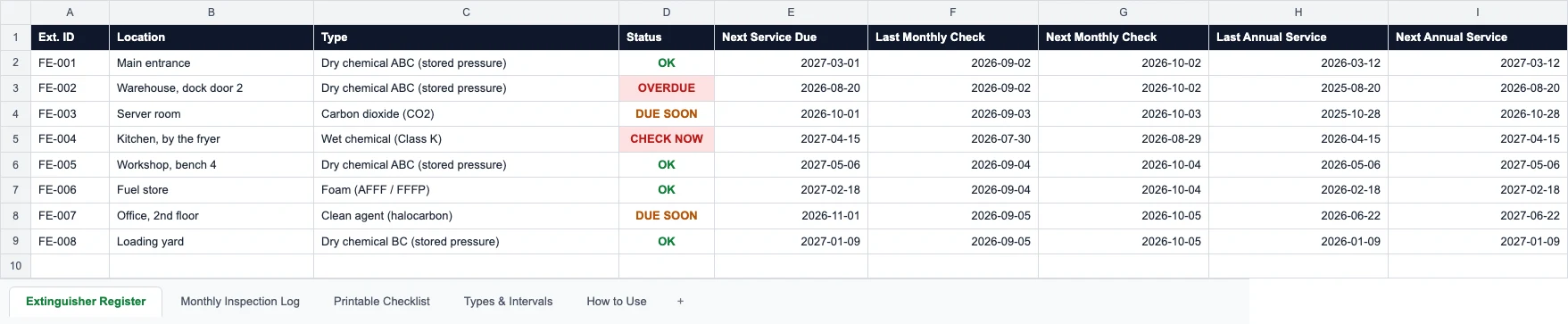
Fire Extinguisher Inspection Checklist
Monthly visual checks, annual maintenance and hydrostatic test dates per extinguisher.
Read more: Fire Extinguisher Inspection Checklist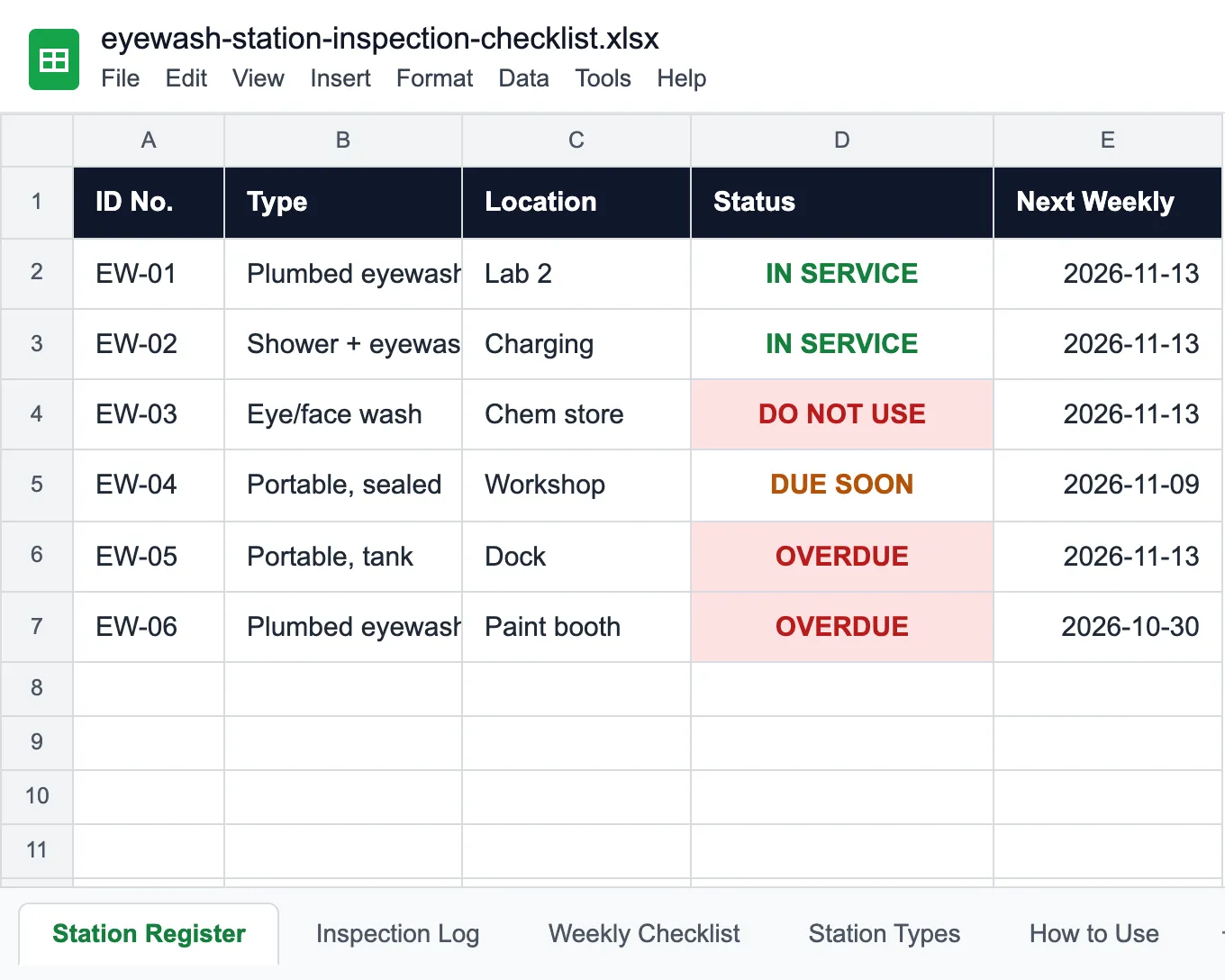
Eyewash Station Inspection Checklist
Weekly checks, annual inspections and fluid change dates per station.
Read more: Eyewash Station Inspection Checklist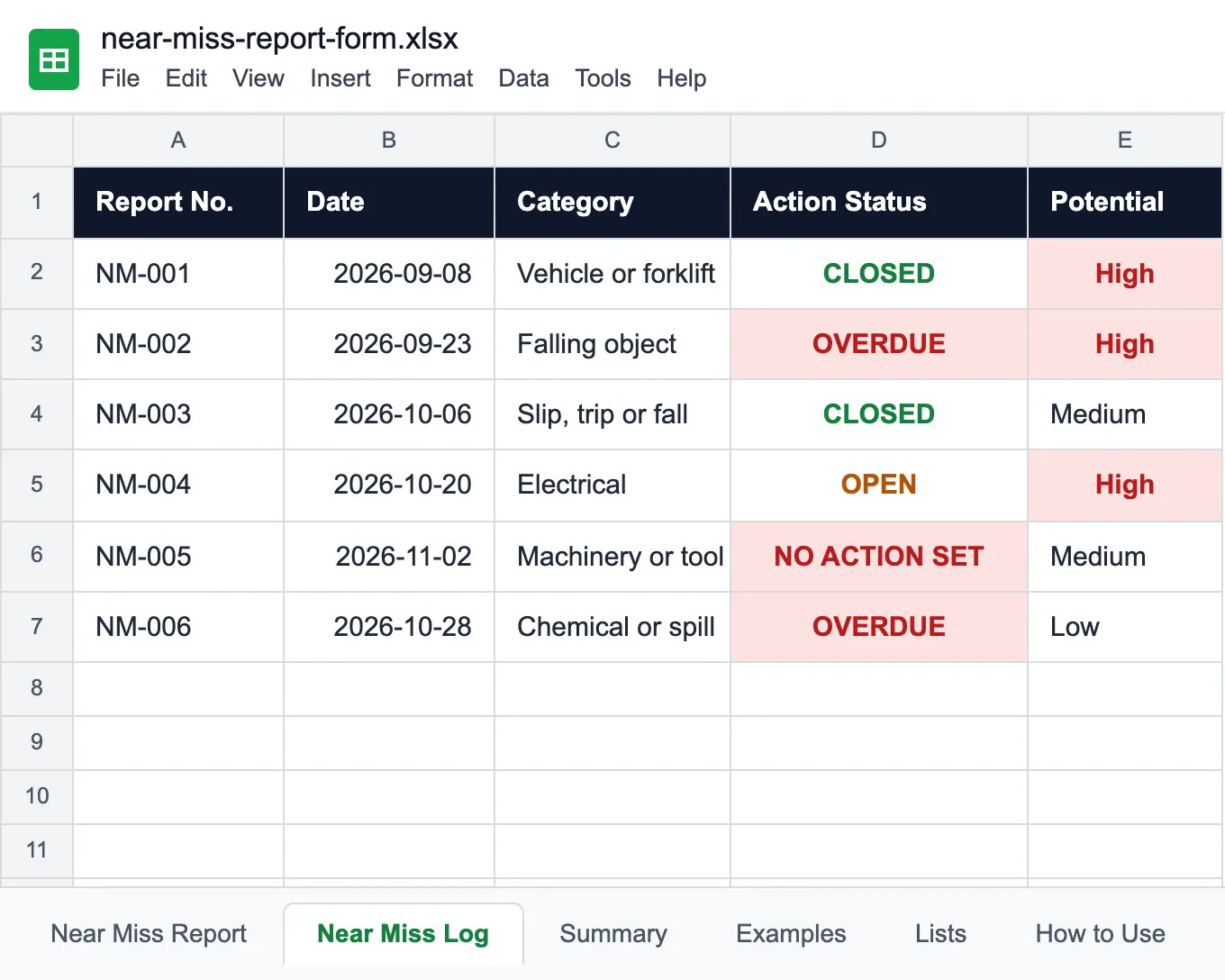
Near Miss Report Form
A one-page near miss report and a log that follows every fix to closure.
Read more: Near Miss Report Form