When I first came across these two terms, I honestly thought they were the same thing - just different names for tracking stuff your company owns. Turns out, the difference is huge. And confusing the two can cost your business real money.
Let me break it down.
Inventory Asset vs Inventory: What's the Difference?
Before diving into management systems, let's clear up the fundamental question: what is an asset vs inventory in the first place?
Inventory - items you buy to sell or consume in the production process. Coffee beans, raw materials, finished goods, office supplies. It's here today, gone tomorrow because you sold it or used it up.
Assets (or fixed assets) - things that help you make money but aren't sold to customers. Equipment, machinery, vehicles, computers, furniture. These stick around for years and are tracked individually over their entire lifecycle.
The simplest test: will you sell it or use it up? → Inventory. Will it work for you for years? → Asset.
A Simple Example
Picture a small coffee shop.
Inventory - that's your coffee beans, milk, syrups, cups. The stuff you buy to sell or use up making your product.
Assets - that's your espresso machine, refrigerator, POS system, tables and chairs. The things that help you make money but aren't sold to customers. These stick around for years.
Pretty obvious, right? But in the real world, the lines get blurry - and that's where things get interesting.
What Is Inventory Management
Inventory management is about controlling what flows through your business. Stock on shelves, raw materials, components, finished goods. It's also the bigger discipline by market attention — US searches for inventory software outnumber asset-management software roughly six to one, per our asset management statistics.
The key questions here:
- How much do we have left?
- When do we need to reorder?
- Where is it located?
- Will it expire before we sell it?
It's all about turnover - making sure you don't run short or overstock. Too little inventory means lost sales. Too much means tied-up cash and potential write-offs.
Typical metrics: inventory turnover ratio, days sales of inventory, carrying costs, reorder point.
What Is Asset Management
Asset management is about the long game. It's about things that work for you for months and years.
Different questions here:
- What condition is the equipment in?
- When is maintenance due?
- How much longer will it last?
- Is it cheaper to repair or replace?
- Who's currently using this laptop?
It's about the full asset lifecycle: from purchase through operation to disposal or resale. Depreciation, replacement planning, making sure expensive equipment isn't sitting idle.
Key Differences: Inventory Asset vs Inventory Management
| Aspect | Inventory Management | Asset Management |
|---|---|---|
| What you track | Consumables and goods for sale | Equipment, machinery, tools |
| Time horizon | Days, weeks, months | Years |
| Main goal | Optimize turnover | Maximize ROI |
| Accounting | COGS, FIFO/LIFO | Depreciation, book value |
| Typical action | Replenish stock | Schedule maintenance, repair |
Inventory vs Equipment: How to Tell the Difference
People often ask: is a piece of equipment inventory or an asset? The short answer - equipment is almost never inventory.
Inventory gets consumed, sold, or used up within a short cycle: raw materials, stock, spare parts, consumables. You track it by quantity and location.
Equipment (fixed assets) lasts for years, is tracked individually, and depreciates over time. A delivery van, a CNC machine, a laptop, a server rack - these are all equipment, not inventory.
The practical rule:
- Sells or gets consumed → Inventory
- Stays and works for years → Equipment (Asset)
Where it gets tricky: spare parts for equipment live in inventory until they're installed - then they become part of the asset. Consumables like oil, toner, and filters are always inventory, even when used exclusively to maintain equipment.
The Gray Area
Now here's what used to trip me up.
Office supplies - what are those? Printer cartridges, pens, light bulbs. Technically not goods for sale, but you wouldn't call them assets either. Most companies treat these as inventory - they get used up fast and don't need individual tracking.
What about small tools? Screwdrivers, drill bits, measuring instruments. If each one costs a few bucks - easier to track as consumables. If it's expensive professional equipment - that's an asset.
Rule of thumb: if it lasts more than a year and costs above a certain threshold (every company sets their own, often aligned with IRS guidelines for capitalization), it's an asset.
Why Mixing Them Up Is a Problem
I knew a company that tracked expensive testing equipment as inventory for years. The result: no scheduled maintenance, no depreciation tracking, no idea when replacements were needed. Equipment failed at the worst possible times, and their books were a mess. Their auditors weren't happy either.
The other extreme: trying to run full asset management on every box of paper clips. That's bureaucracy for bureaucracy's sake - it eats more resources than it saves.
What They Have in Common
Despite the differences, both systems share one goal - knowing what you have, where it is, and how to use it as efficiently as possible. Both require:
- Accurate tracking
- Regular audits (physical counts)
- Clear processes
- The right software
And often modern systems handle both. ERP platforms like SAP, Oracle NetSuite, or Microsoft Dynamics work with both inventory and fixed assets. For a small business, even a well-organized spreadsheet can work - as long as you understand the difference in approach.
How Asset Management Uses Inventory Management (And Why It's Critical)
Here's where it gets really interesting. In practice, these two systems don't live in isolation - they constantly intersect. And if you don't build a connection between them, problems start piling up.
Spare Parts: The Bridge Between Two Worlds
Say you've got a CNC machine on your production floor worth a couple hundred thousand dollars. That's an asset, and you track it in your asset management system: runtime hours, maintenance schedule, depreciation.
But to keep that machine running, you need spare parts. Filters, belts, bearings, seals. And those spare parts? That's inventory. They sit in your stockroom, they have quantities on hand, reorder points, lead times. Without proper stock replenishment, critical parts run out at the worst time.
What happens when the systems aren't connected?
Your maintenance tech shows up for scheduled preventive maintenance, and the filter you need isn't in stock. Someone forgot to order it. The machine sits idle for a day, two days, a week - waiting for the part to arrive. Losses can run into tens of thousands of dollars. And if you're in manufacturing, you might be looking at missed shipments and unhappy customers.
Or flip it around: you've got spare parts gathering dust on shelves for equipment you decommissioned three years ago. Capital tied up in junk nobody needs.
Consumables for Maintenance
Every asset needs consumables to operate and maintain:
- Printer (asset) → toner cartridges, paper (inventory)
- Company vehicle (asset) → oil, filters, brake pads (inventory)
- Server (asset) → thermal paste, cables, replacement drives (inventory)
- Commercial espresso machine (asset) → descaling solution, gaskets (inventory)
When you schedule maintenance in asset management, the system should automatically check: do we have everything we need in stock? If not - trigger a purchase requisition ahead of time, not the day of the repair.
Real-World Example: How It Works When Connected
Let me tell you how this worked at an IT company I consulted with.
They had about 200 employees, each with a company laptop. A fleet of roughly 200 MacBooks and ThinkPads across different generations. Every laptop was an asset with its own record: model, serial number, purchase date, warranty expiration, assigned user, repair history.
The IT team knew from experience: MacBook batteries start degrading around the 3-year mark - going from 8 hours to maybe 2-3. ThinkPads tend to have SSD failures around 2-2.5 years in. Not catastrophic failures, just normal wear. But if you're not prepared, it hurts.
Their asset management system tracked the age of every device. About a month before the "danger zone," it would ping inventory management: "Check stock for MacBook Pro 2022 battery (part number XXX) — need 3 units" or "Need Samsung 970 EVO 1TB SSD — 5 units."
If stock was low, a purchase order was automatically generated. By the time a developer walked in complaining their laptop dies by lunchtime, the replacement part was already on the shelf. Swap takes an hour, not a week waiting for delivery.
After the repair, inventory management logs the battery or drive as used, and asset management records the event in the laptop's history: what was replaced, when, how much it cost. A year later, when they're deciding whether to retire that laptop or squeeze another year out of it — all the data is right there.
Bonus: when the company retired a batch of old laptops, they could immediately see which spare parts in stock were now useless. Batteries for 2019 MacBooks? No devices left in the fleet that need them. Sell them on eBay, return to vendor, or donate — but stop storing them "just in case."
Why This Is Business-Critical
1. Downtime = Money
Every hour equipment sits idle waiting for a part is a direct loss. In some manufacturing environments, an hour of line downtime costs more than a year's worth of consumables. In an office setting, a developer without a working laptop for a week is easily $5,000+ in lost productivity.
2. Budget Planning
When systems are connected, you can forecast: "Next quarter we need to do PM on 12 machines, which will require $15,000 in parts." Without the connection, you're just guessing — and usually getting surprised.
3. Inventory Optimization
You know exactly which parts support which equipment. Decommission an old asset — you know which parts to clear out. Bring in new equipment — you know what to add to stock. No more mystery boxes in the corner of the warehouse.
4. History and Analytics
The connection lets you see the full picture: this machine consumed $8,000 in parts this year, while an identical one only used $2,000. Why? Maybe the first one needs replacing. Maybe the operator needs retraining. You can't ask these questions if the data lives in separate silos.
What a Disconnected System Looks Like (Spoiler: Not Good)
I've seen a company where asset management lived in one system, inventory in another, and between them was a person with an Excel spreadsheet trying to tie it all together.
What they got:
- Parts ordered "by feel," with extra buffer stock just in case
- Warehouse was packed, but the right part was often missing
- Rush orders cost 3x more (expedited shipping, premium pricing from vendors)
- Nobody could say what it actually cost to maintain each piece of equipment
- Physical inventory counts turned into a scavenger hunt — "what is this even for?"
- Audit season was a nightmare
Minimum Viable Integration: Where to Start
If you don't have a unified system yet, start with these basics:
- Link spare parts to assets. In each asset's record, list the consumables and parts it needs, with part numbers.
- Sync maintenance schedules with inventory. Before every scheduled PM — check stock levels.
- Charge parts to specific assets. Not just "used 5 quarts of oil" but "used on Forklift #7" or "installed in laptop SN-12345."
- Analyze consumption. Once a quarter, review: which assets are consuming the most parts? Is that normal, or a red flag?
Even these simple steps can transform your operations.
Final Thoughts
There's no universal answer to which system matters more. For a retail store, inventory management is survival. For a manufacturing plant with expensive equipment, asset management might be more critical. For a tech company, it's probably both.
The key is understanding the difference and using the right tool for the right job. A hammer is great for nails but lousy for screws. Same principle here.
If you're just getting started with this stuff, try a simple exercise: walk through your business and split everything into two buckets. What gets consumed or sold? What sticks around and helps you make money? That exercise alone will give you plenty to think about.
And remember — the real magic happens when you connect the two.
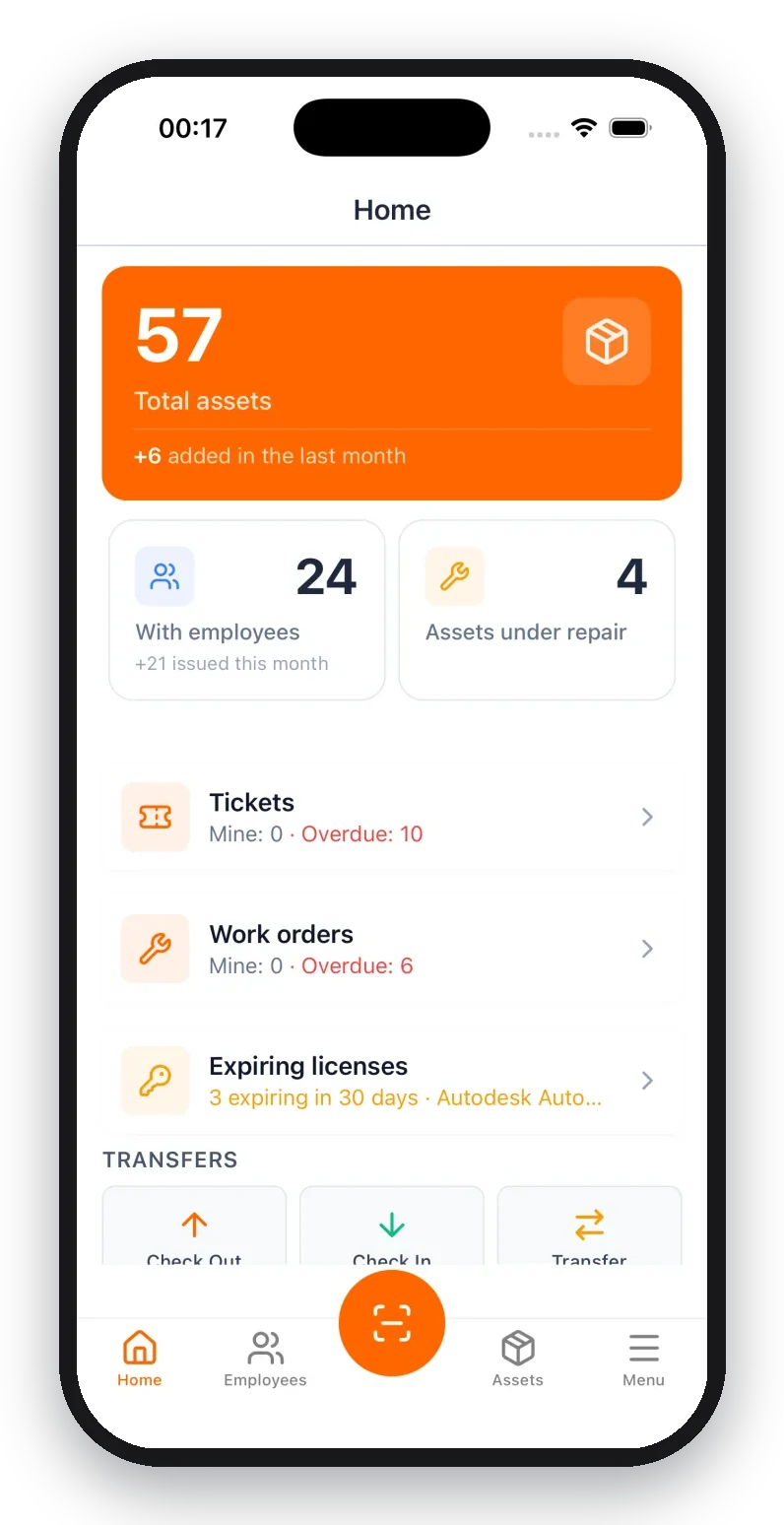
Looking for a platform that brings asset management and inventory management together? Unio24 offers an integrated solution that connects your assets with spare parts and consumables — so you always know what you have, what you need, and when to order. No more spreadsheets, no more surprises.